Crete: the top twenty
Twenty things worth doing from Malia, in the order we would actually do them. Everything here fits in a morning or an afternoon and gets you back for dinner at the hotel, which is already paid for. None of it needs a hire car.
The forecast for the week is 26 to 29 degrees, feeling like 28 to 32, and not a drop of rain all week. The sun is the thing to respect rather than the heat: the UV index is 8 every day. The wind turns north from Friday, which is the day to be somewhere indoors rather than on a boat.
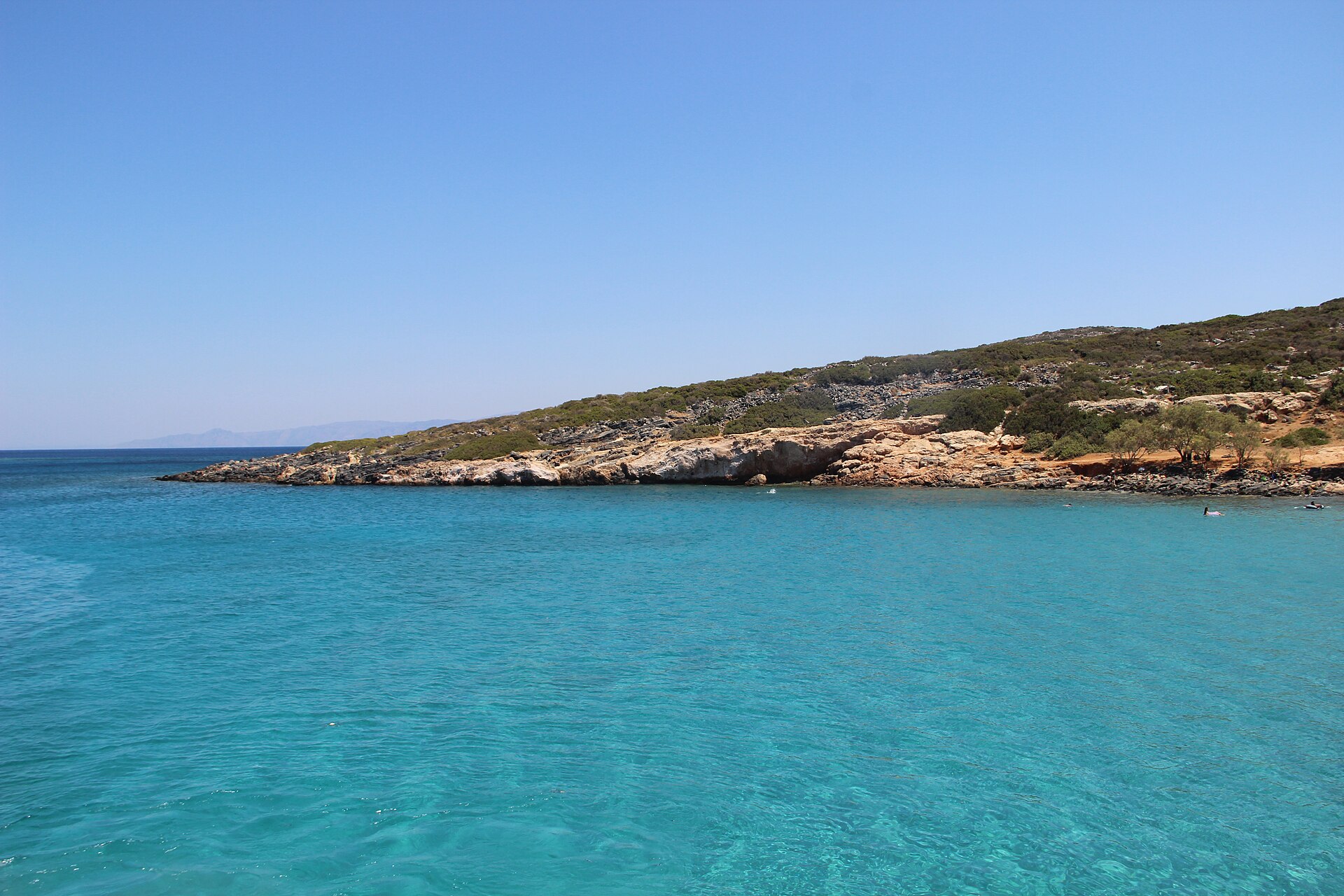
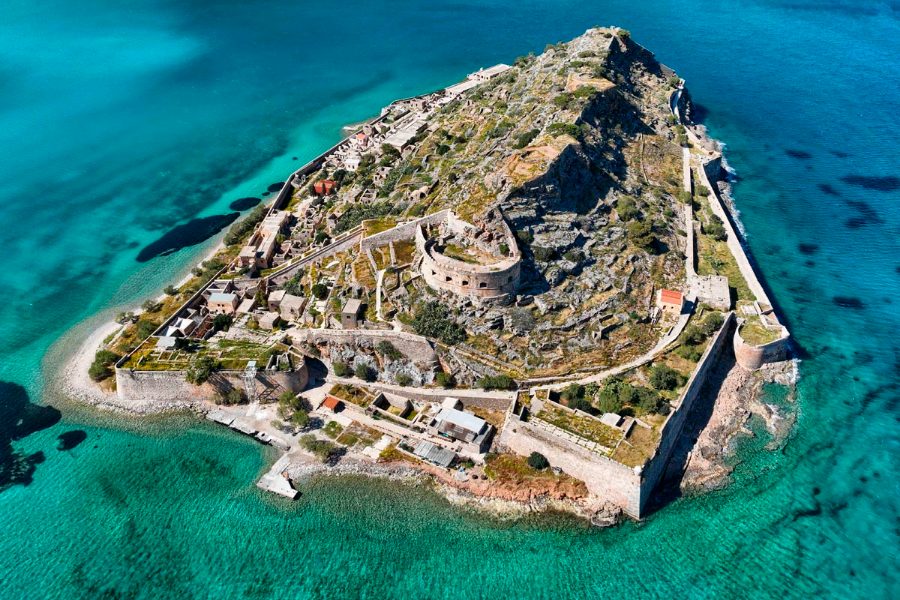
Spinalonga
A Venetian fortress on a bare rock, and Europe's last leper colony.
You approach it by sea, which is the only way, and the walls come up out of the water exactly as they were built to. Inside is a whole abandoned street: houses, a church, a bakery, the tunnel new arrivals were walked through. It was a leper colony until 1957, within living memory, and the island has been left as it was found rather than tidied into a monument, which is what makes it land. Twenty minutes on a boat each way across a turquoise channel, and lunch in Elounda afterwards. Nothing else on this list stays with people the way this does. The ground is uneven and unshaded and you stay until the boat returns, so go early and take it slowly.
Moderate, some uneven ground or a fixed return, fine taken slowly
Exposed heights
50 min by taxi, then a 20 min boat
About 42 EUR a head on a tour, less by boat from Plaka
Open in Google Maps ↗
Elounda
Fishing boats, a red-domed church, and the best lunch on this coast.
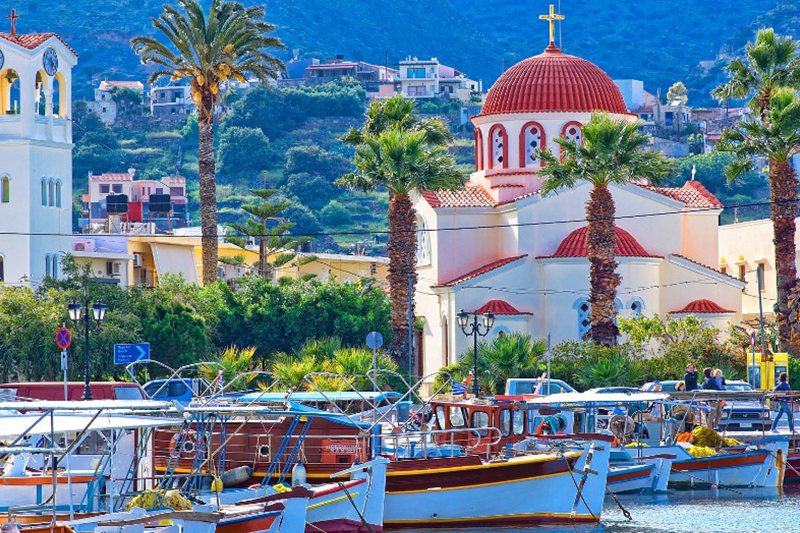
A working harbour that happens to be beautiful: painted caiques tied along the quay, a red-domed church behind them, palms, and a line of tavernas where the fish is landed rather than delivered. The bay is shallow and almost still, so the whole place has the calm of somewhere sheltered. This is the lunch everyone remembers, and it is also the jetty for the Spinalonga boats, so the two make one unhurried day. Anyone who would rather not walk the island can sit it out here very happily with a coffee and the view.
Easy, flat, shade or a seat nearby, stop whenever you like
45 min by taxi
Lunch, and the boat if you take it
Open in Google Maps ↗
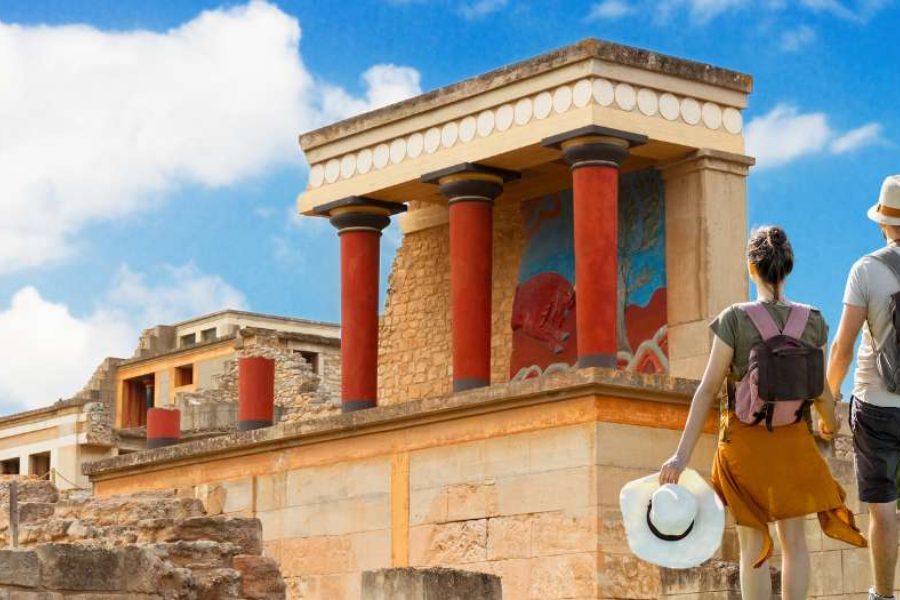
The Minoan Palace of Malia
A four-thousand-year-old palace, ten minutes away, and nearly empty.
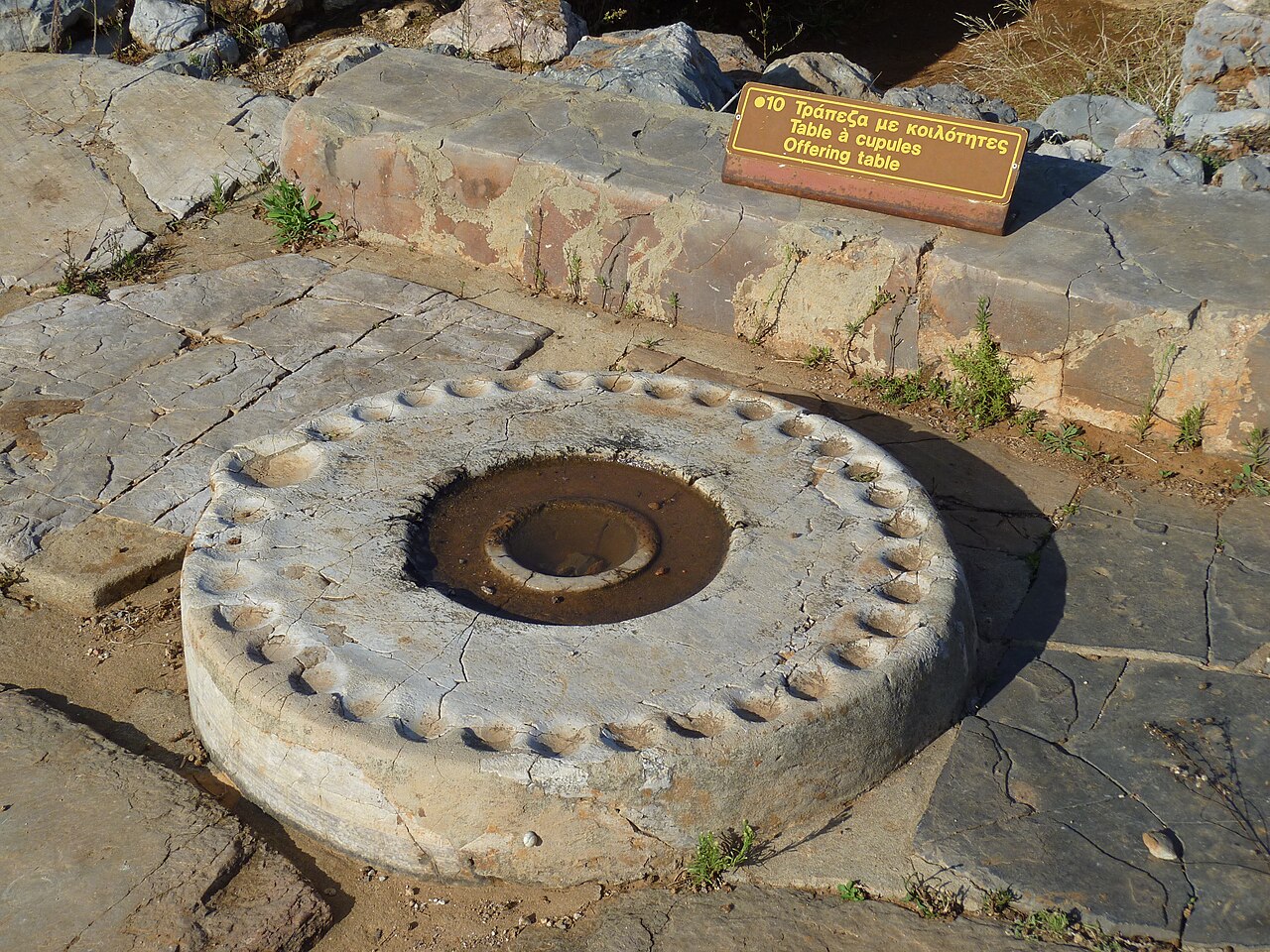
The third-largest palace the Minoans built, on flat ground by the sea a few kilometres from the hotel, and almost nobody goes. You can stand in the central court with the mountains behind you and the sea in front and have the place more or less to yourself, which is not a sentence anyone writes about Knossos. It was never reconstructed, so what you are looking at is the actual thing: storerooms with the great jars still in place, and the kernos, a round offering stone with hollows cut around its rim that nobody has convincingly explained. Go at opening time; there is no shade to speak of.
Easy, flat, shade or a seat nearby, stop whenever you like
10 min by taxi
A few euros at the gate
Open in Google Maps ↗
Agios Nikolaos
A town built around a small lake long believed to be bottomless.
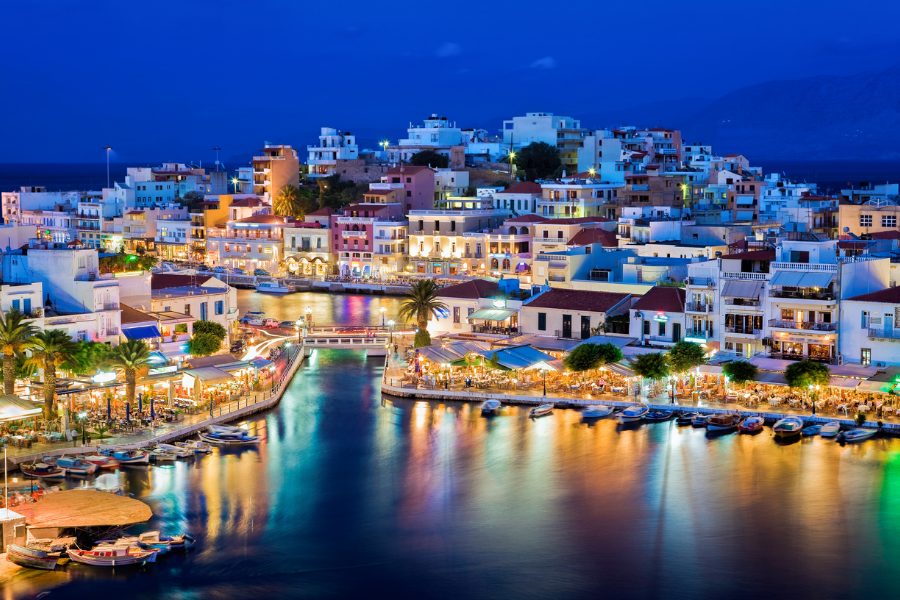
Lake Voulismeni sits in the middle of the town, sixty-odd metres deep, ringed by cafés and joined to the harbour by a short cut channel, so you drink your coffee looking at still green water on one side and fishing boats on the other. It was long held to be bottomless and the stories attached to it have never quite gone away. The town around it is the most walkable on this coast, with a real waterfront rather than a resort strip, and it asks nothing of you: no site, no ticket, no schedule. On the bus line if you would rather not take a taxi.
Easy, flat, shade or a seat nearby, stop whenever you like
40 min by taxi, or the KTEL bus
Only what you eat
Open in Google Maps ↗
Heraklion Archaeological Museum
Everything the palaces gave up, in one building.
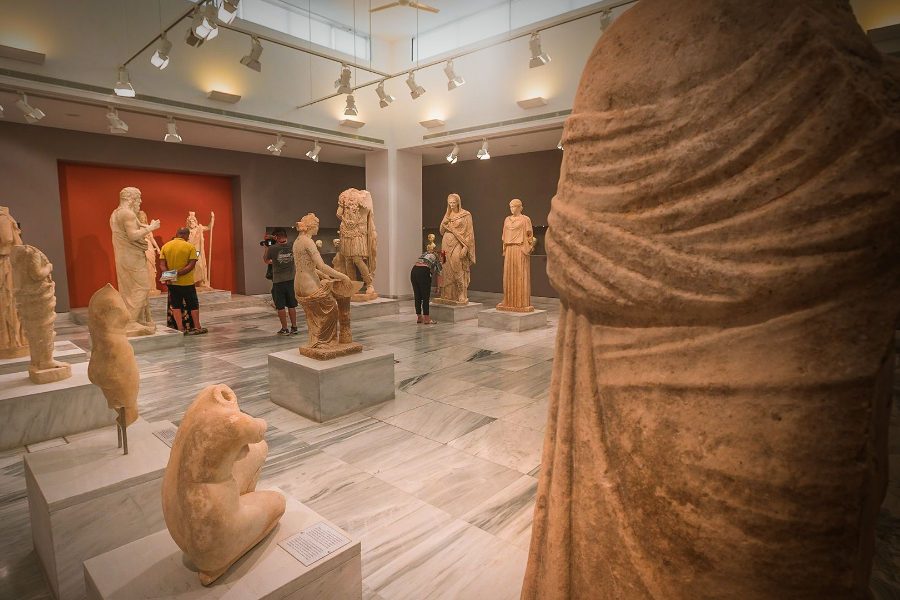
This is where the Minoans actually are. The frescoes are here, not on the sites: the dolphins, the bull-leapers, the blue monkeys. So are the snake goddesses, the carved stone bulls' heads, the gold bee pendant, and the Phaistos Disc, covered in a stamped script nobody has ever read. It is one of the great collections in Europe, it takes about two hours, and it is the one place where four thousand years of this island stops being ruins and turns into people who made things. Air-conditioned, full of benches, and a short walk from lunch in the old town.
Easy, flat, shade or a seat nearby, stop whenever you like
40 min by taxi, or the KTEL bus
Museum ticket
Open in Google Maps ↗
CretAquarium
The Mediterranean, from the other side of the glass.
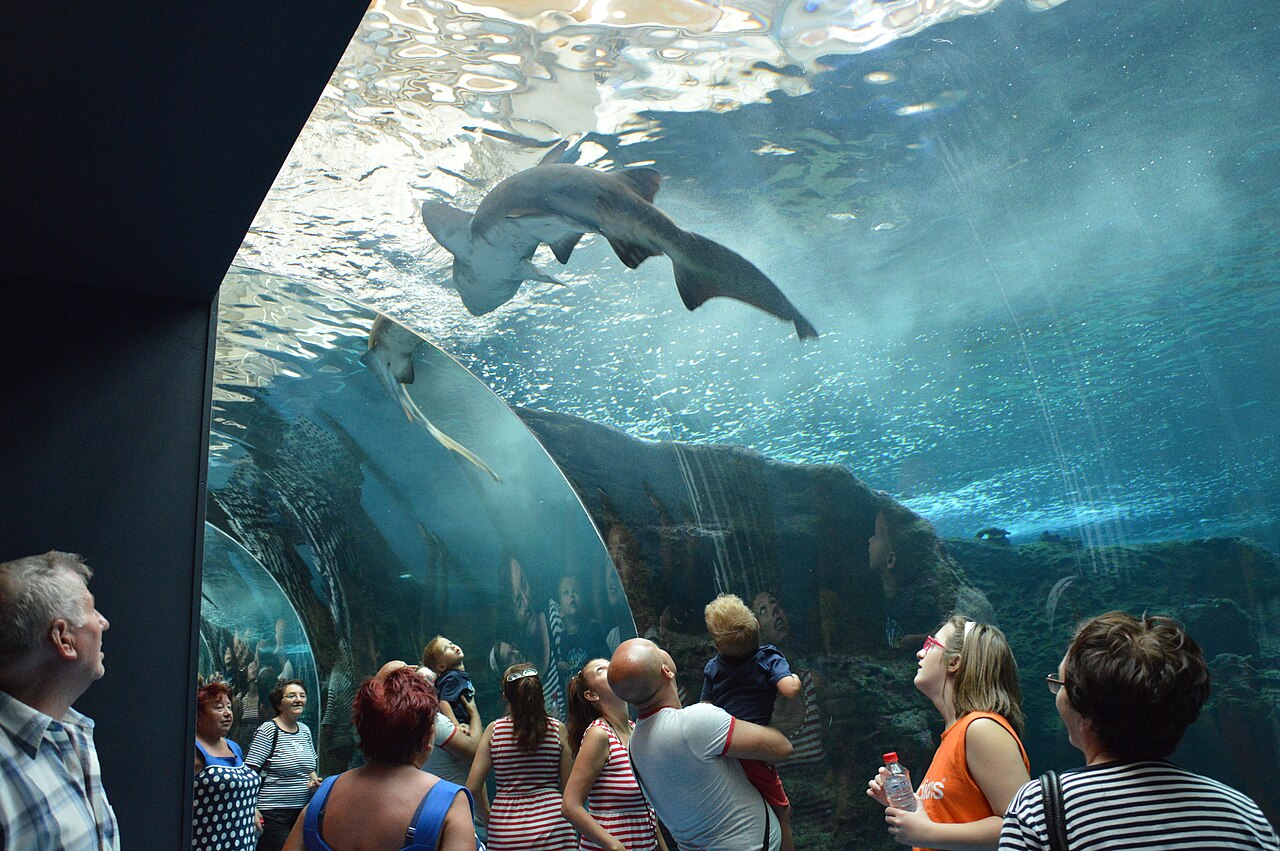
A serious marine research institute that happens to let the public in, and much better than the word "aquarium" prepares you for. Sixty tanks of Mediterranean species, including a big open one where sharks and rays pass at eye level and you end up standing far longer than you planned. It is the same sea you have been swimming in all week, which is the point: you come out recognising things. Cool, level, full of benches, about two hours, and the obvious answer to the windy day at the end of the week.
Easy, flat, shade or a seat nearby, stop whenever you like
25 min by taxi
13.50 EUR a head with the Genius discount
Open in Google Maps ↗
Mochos
Twenty minutes up the hill, and nothing like the coast you left.
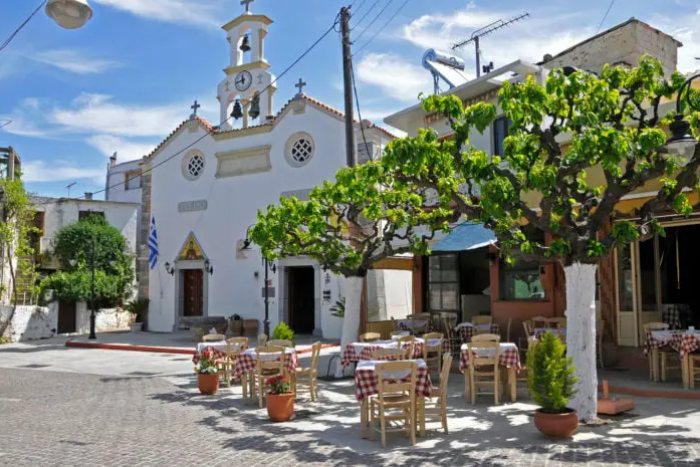
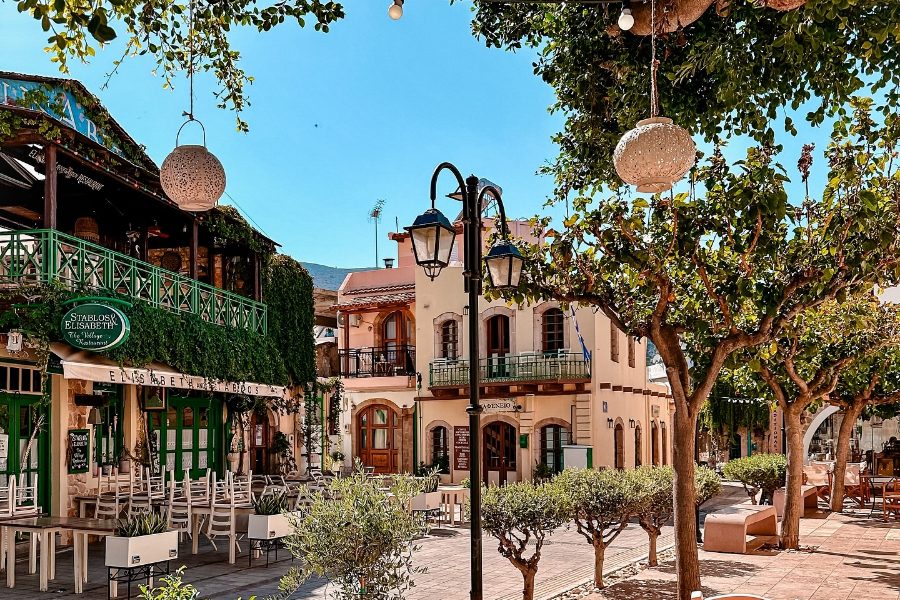
Mochos sits in a bowl of olive groves and vineyards above Malia: a medieval tangle of lanes opening onto a plane-shaded square where the tavernas put their tables under the tree and the evening is a great deal cooler than the one you left. Come for dinner rather than lunch, because the drive up at dusk gives you the whole bay laid out below with the lights coming on. This is the one outing on the list that is better after dark, and it is twenty minutes away.
Easy, flat, shade or a seat nearby, stop whenever you like
Exposed heights
20 min by taxi, uphill
Dinner in a village square
Open in Google Maps ↗
Sissi
A tiny natural harbour with the tavernas built round its edge.
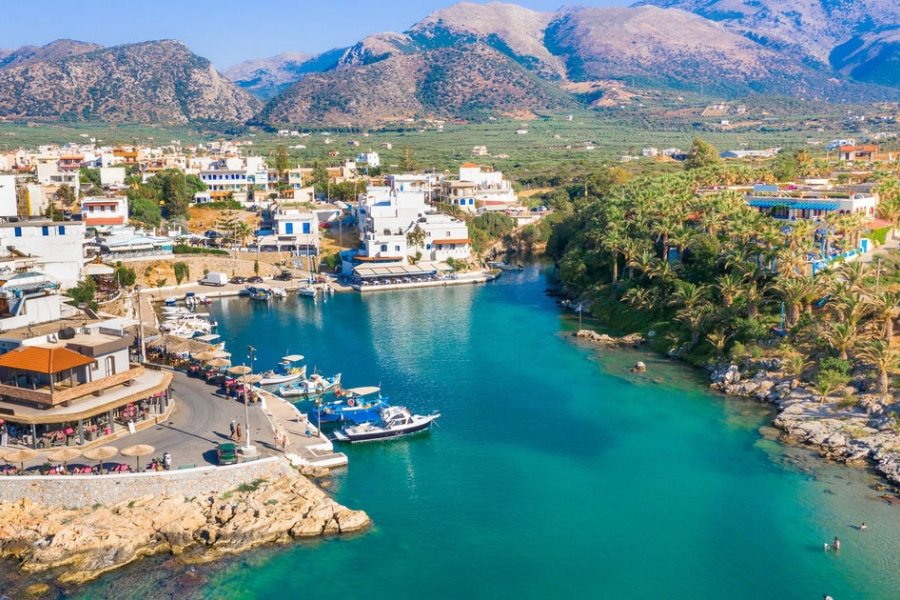
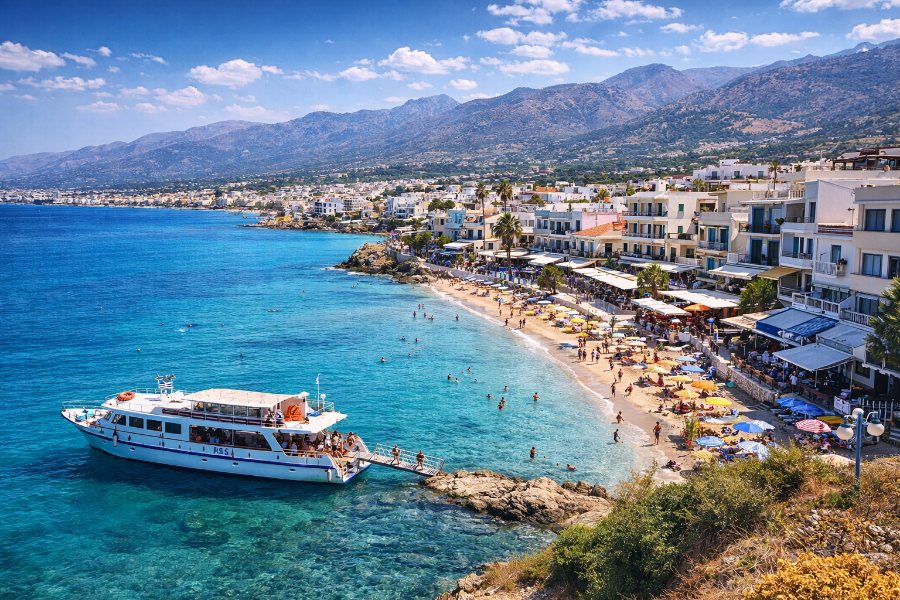
A narrow inlet cut into the rock, so still and so clear that people swim in the harbour itself, with fishing boats moored a few metres away and tavernas built right along the edge. Fifteen minutes from the hotel and it feels like a different decade: no strip, no noise, just a village that happens to have one of the prettiest small harbours on this coast. Go for a long lunch, swim off the rocks afterwards, and come back. It is among the least demanding things on this list and one of the nicest.
Easy, flat, shade or a seat nearby, stop whenever you like
15 min by taxi
Lunch by the water
Open in Google Maps ↗
Lychnostatis Open Air Museum
A Cretan village of a century ago, and you are invited to touch it.
One man built this over decades on the coast at Hersonissos: a stone house furnished as it would have been, a windmill, an olive press, a wine press, a shepherd's shelter, and gardens of herbs and fruit trees you are invited to smell and taste. The whole place runs on the principle that you should handle things rather than read labels about them, which makes it far livelier than a folk museum has any right to be. About two hours, flat, shaded by the gardens, and it explains more about how this island actually lived than any of the palaces do.
Easy, flat, shade or a seat nearby, stop whenever you like
15 min by taxi
About 8 EUR a head
Open in Google Maps ↗
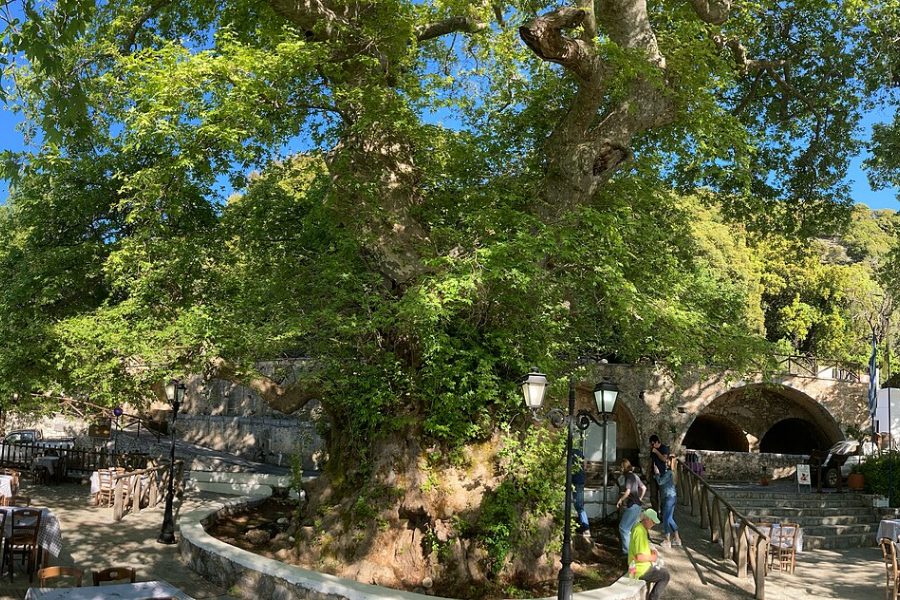
Krasi and its plane tree
One of the oldest and largest plane trees in Europe, with tables under it.
The tree is the reason to go: a plane so old and so vast that it takes several people with arms outstretched to ring the trunk, standing over the village spring where the water still runs cold out of Venetian stone troughs. The tavernas put their tables in its shade, and the local order is sarikopita, the coiled cheese pie fried and finished with honey. It is a short stop rather than a day, and it pairs naturally with Mochos on the same road up, or with the Lasithi plateau beyond it.
Easy, flat, shade or a seat nearby, stop whenever you like
Exposed heights
25 min by taxi, uphill
Lunch, and cheese pie
Open in Google Maps ↗
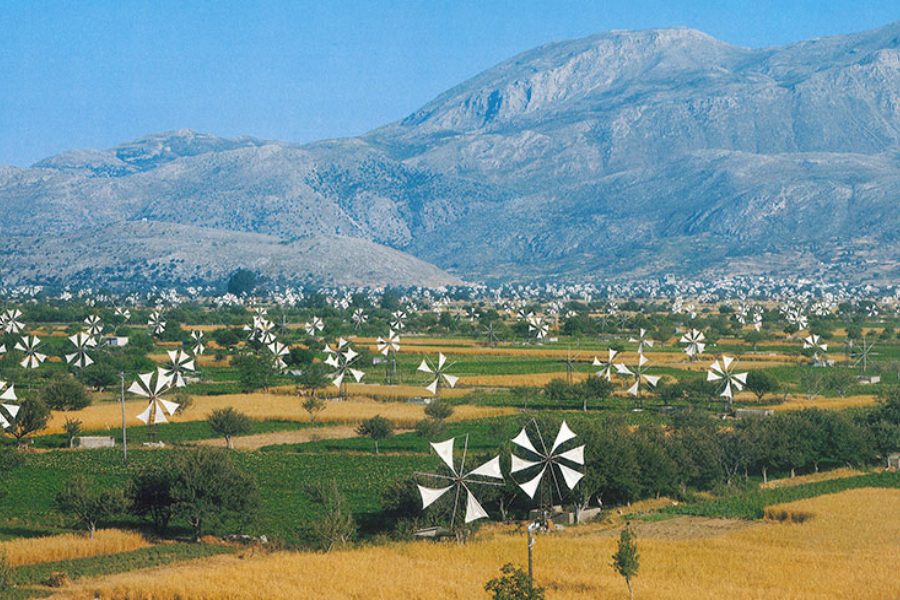
The Lasithi Plateau
A flat green plain at 850 metres, ringed by mountains on every side.
An hour of switchbacks and you come out somewhere that looks like it belongs to another country: a perfectly flat bowl of fields at 850 metres, ringed by mountains the whole way round, with villages spaced along the rim. It has been farmed continuously for thousands of years, and the white cloth sails of its irrigation windmills, thousands of them once and far fewer now, are the image of Crete that ends up on every poster. It is noticeably cooler than the coast, which in August is reason enough. The cost is the road: an hour of bends each way.
Moderate, some uneven ground or a fixed return, fine taken slowly
Exposed heights
60 min by taxi, on mountain roads
The taxi, and lunch in a village
Open in Google Maps ↗
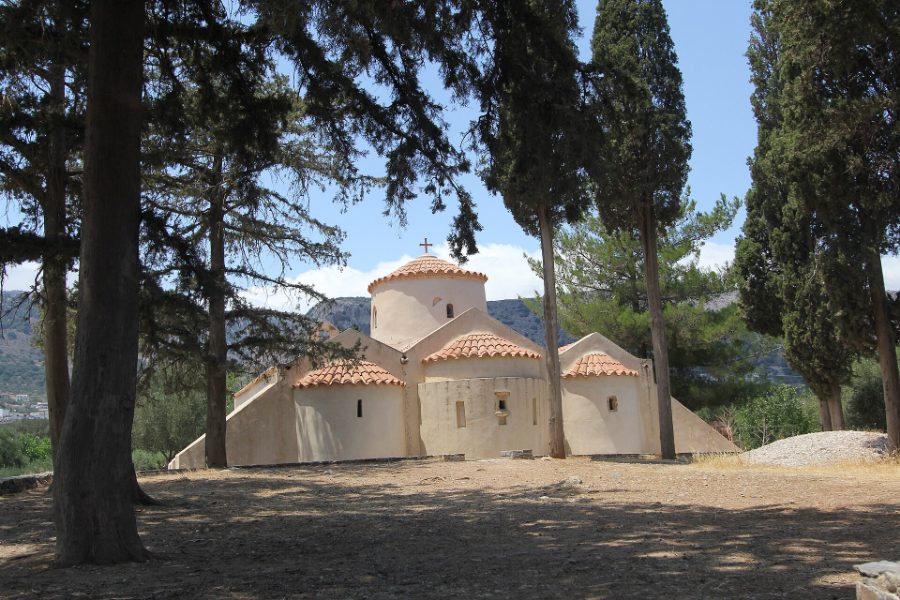
Kritsa and Panagia Kera
The best-preserved Byzantine frescoes on the island, in a tiny white church.
A small three-aisled church under cypresses on the road up to Kritsa, painted inside from floor to vault in the thirteenth and fourteenth centuries and never whitewashed over. Every surface is covered: the life of Christ, a crowded Second Coming, and a rare portrait of Saint Francis that has no business being in a Greek Orthodox church and is exactly what makes the place interesting. It takes twenty minutes to see and is one of those rooms people remember for years. Kritsa itself is a little further on, a proper hill village known for its weaving, and good for lunch afterwards.
Easy, flat, shade or a seat nearby, stop whenever you like
Exposed heights
50 min by taxi
A small entry fee, and lunch in the village
Open in Google Maps ↗
Archanes and the wine road
Grapes that grow nowhere else, and a village restored street by street.
The vineyards south of Heraklion have been making wine for something like four thousand years, and the interesting part is that they do it with grapes almost nobody outside Greece has drunk: Vidiano and Vilana in white, Kotsifali and Liatiko in red. Several estates around Peza and Archanes run tastings and will walk you through the cellar. Archanes village itself was restored street by street and is now one of the prettiest in Crete, with a square made for a long lunch. Half a day, a driver, and almost no walking.
Easy, flat, shade or a seat nearby, stop whenever you like
50 min by taxi
Tastings, and lunch in the village
Open in Google Maps ↗
Hersonissos
The nearest place with a proper evening, and a harbour worth the walk.
Ten minutes west and considerably more varied than Malia: a long seafront promenade, a small harbour with the boats lit up, and enough restaurants and bars that you can pick rather than settle. There are Roman fish tanks cut into the rock at the water's edge, easy to miss and worth finding. If you only go out once in the evening, this is the place to do it, and it is close enough to come home from at any hour without planning anything.
Easy, flat, shade or a seat nearby, stop whenever you like
10 min by taxi
An evening out
Open in Google Maps ↗
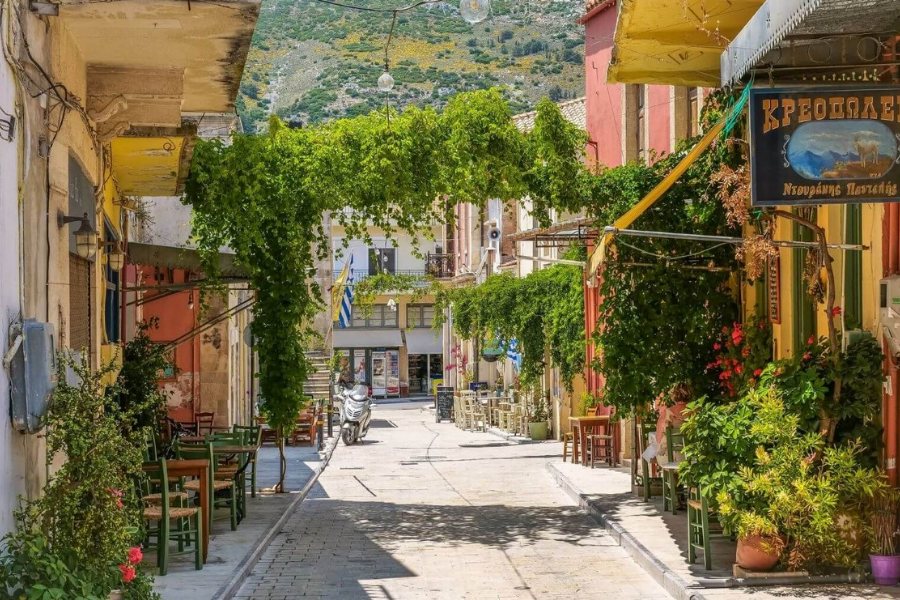
Malia old town
Not the strip. Uphill, inland, and a completely different village.
Malia's reputation belongs to a few specific streets near the beach. Walk inland and uphill instead and you find the village those streets grew out of: narrow whitewashed lanes, bougainvillea over the doorways, old men outside the kafeneio, and tavernas with six tables and no menu in English. It is ten minutes away and nobody is selling you anything. Worth one evening, accepting that you have already paid for a dinner you are not eating.
Easy, flat, shade or a seat nearby, stop whenever you like
10 min by taxi, or 25 min on foot
One dinner away from the hotel
Open in Google Maps ↗
Stalis
The long quiet stretch of sand between the two resorts.
Malia and Hersonissos both have reputations; the beach between them has none, and that is the appeal. Stalis is a long shallow sweep of sand with the water staying waist-deep a good way out, a row of unhurried tavernas behind it, and none of the volume of either neighbour. It is the obvious change of scene on a day when nobody wants to organise anything: eight minutes in a taxi, or a walk along the sand if the morning is cool enough.
Easy, flat, shade or a seat nearby, stop whenever you like
8 min by taxi, or 35 min along the beach
A sunbed and lunch
Open in Google Maps ↗
Milatos
A fishing hamlet, and a cave with a story nobody there has forgotten.
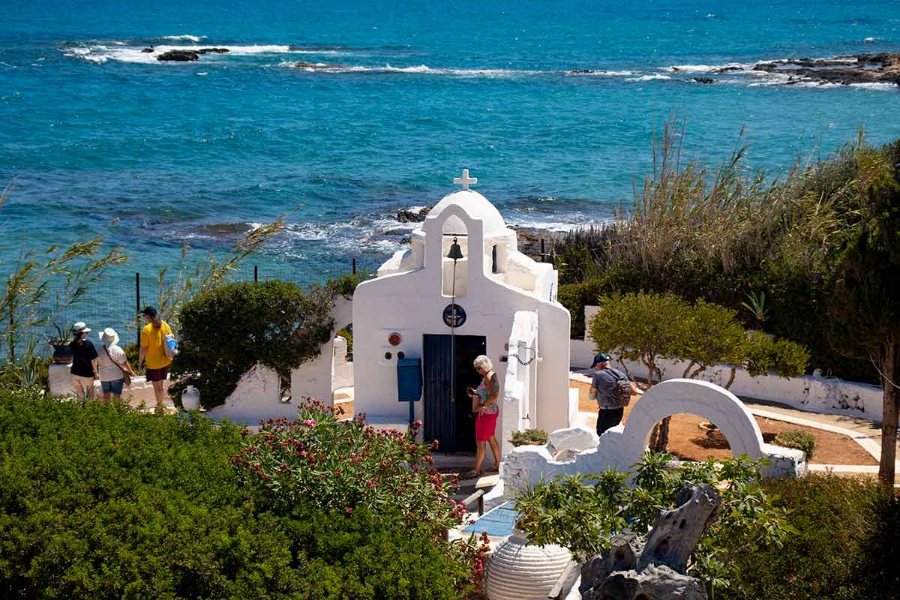
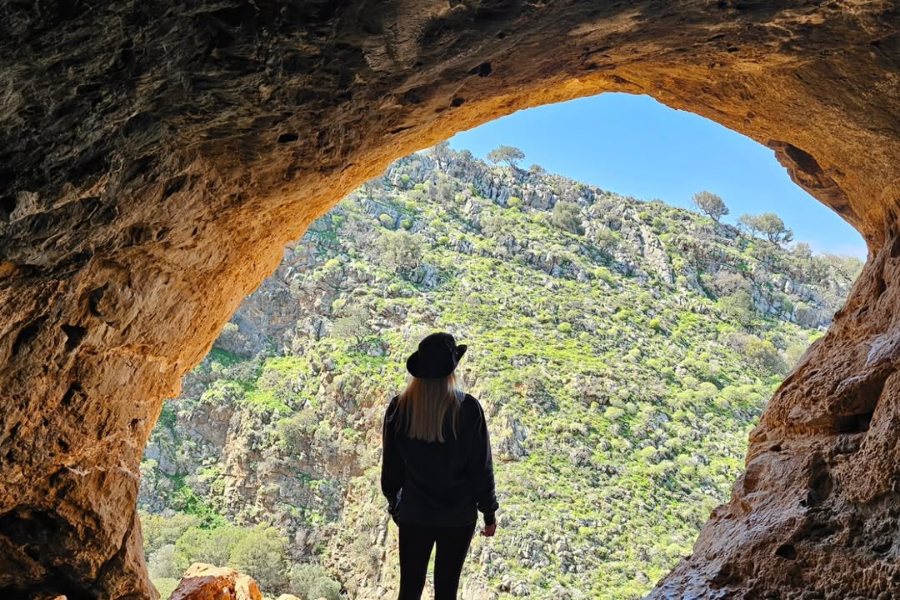
Milatos is a handful of tavernas along a pebbly shore where the fish comes off the boats and lunch takes as long as you let it. Above the village a rocky path leads in about ten minutes to a large cave where several hundred villagers sheltered during the revolt of 1823 and were killed after a siege. There is a small chapel inside now, and an ossuary. It is a quiet, serious place ten minutes' walk from a very good lunch, which is a combination Crete does better than anywhere.
Moderate, some uneven ground or a fixed return, fine taken slowly
20 min by taxi, then 10 min on foot to the cave
Lunch, and nothing else
Open in Google Maps ↗
Knossos
The most famous ruin in Greece after the Acropolis, for better and worse.
Twelve hundred rooms, a throne room with the gypsum seat still in place, red columns that taper downwards, and the labyrinth the Minotaur story was built on. It is the biggest thing the Minoans left and there is a reason everyone goes. The catch is Sir Arthur Evans, who rebuilt large parts of it in concrete a century ago according to what he thought it should look like, and opinions on the result have never settled: it is the lowest-rated thing on this list. In August it is also hot, exposed, uneven and very crowded. If you go, go at opening time and take a guide, because without one a lot of it is just concrete.
Demanding, sustained walking or steep ground, go early or not at all
45 min by taxi
26 EUR, or 28 EUR with an audio guide
Open in Google Maps ↗
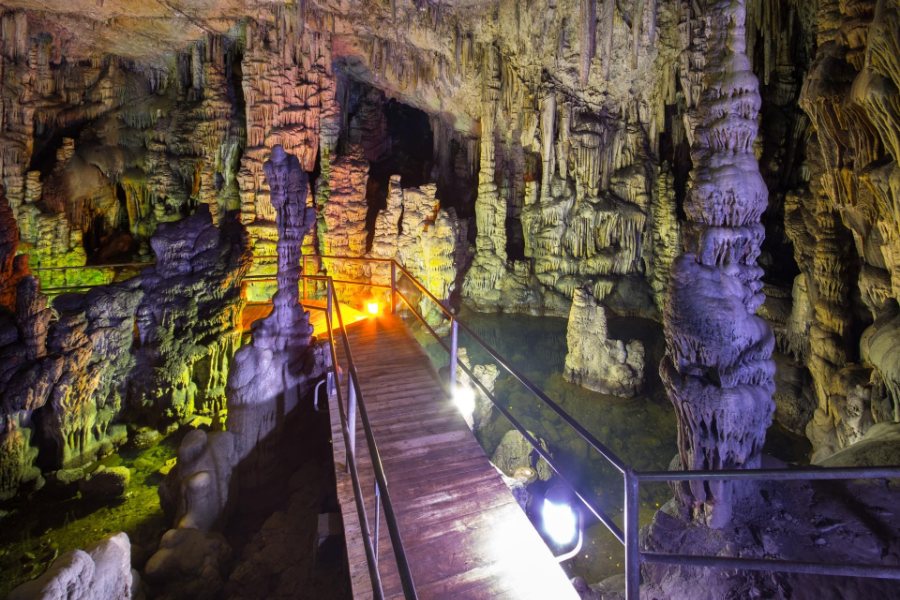
The Dikteon Cave
Where Zeus was born, according to people who believed it for a thousand years.
On the rim of the Lasithi plateau, at just over a thousand metres, the cave where Rhea is said to have hidden the newborn Zeus from his father. People left offerings here for well over a millennium and the archaeology bears the story out as a real cult site. Four hundred steps descend into a chamber of stalactites around a still black pool. It is genuinely impressive, and it is the hardest thing on this list by a wide margin: a steep fifteen-minute climb to the mouth, then those steps, worn smooth and often wet. Donkeys are available for the climb up. Not one for a bad knee.
Demanding, sustained walking or steep ground, go early or not at all
Exposed heights
70 min by taxi, then a steep 15 min climb
A few euros, plus a donkey if you want one
Open in Google Maps ↗
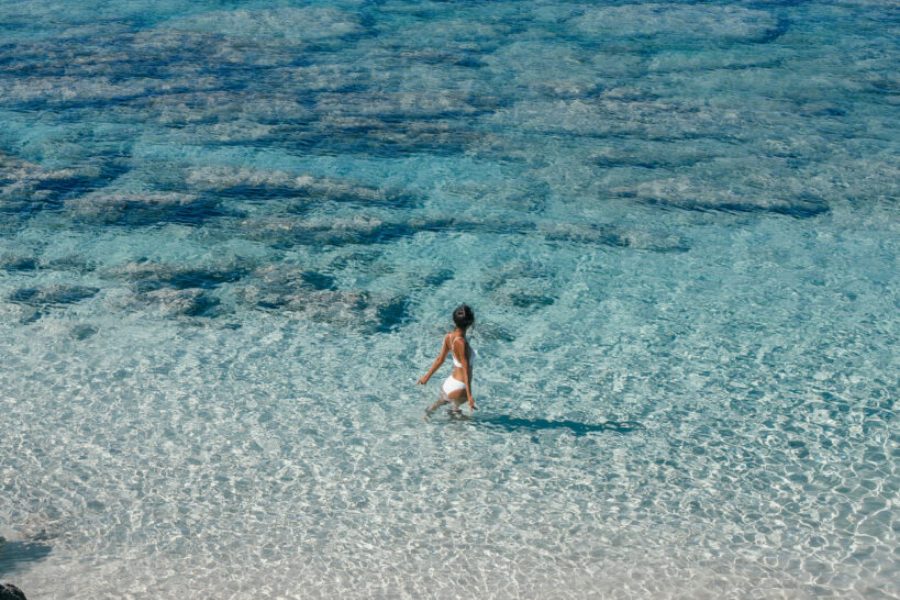
The sea, and the afternoon
August is when the Mediterranean is warmest. This is what the week is for.
The twentieth entry is not a place. Two or three outings across five days is the plan, which leaves at least two days with nothing in them at all, and those are reliably the ones people describe afterwards. The sea is at its warmest all year in August, four pools and a private stretch of beach are directly downstairs, dinner is cooked for you, and none of it has to be earned. If the north wind gets up and the beach turns choppy, that is the afternoon for the aquarium.
Exposed heights
Marked outings involve real exposure: a mountain road with open drops, a path above the sea, or a steep descent. Worth knowing in advance if heights are a problem for anyone, because it is the road as much as the destination.
Two or three of these, not twenty. The list is long so there is something for whatever the day turns out to be, not so it gets worked through.
 1
1